
How to Identify Hidden Water Leaks Fast: Comprehensive Detection and Prevention Guide
To identify hidden water leaks quickly, you can follow these steps:
- Check for Signs of Water Damage: Look for water stains, mold, or mildew on walls and ceilings, which can indicate hidden leaks.
- Monitor Water Bills: A sudden increase in your water bill may suggest a leak.
- Inspect Water Meter: Turn off all water sources in your home and check the water meter. If it continues to run, you likely have a leak.
- Listen for Unusual Sounds: Pay attention to sounds of dripping or running water when all fixtures are off.
- Use a Moisture Meter: If available, a moisture meter can help detect hidden leaks behind walls or under floors.
- Check Appliances: Inspect appliances like dishwashers, washing machines, and refrigerators for leaks.
- Look Under Sinks: Examine under sinks for any signs of moisture or pooling water.
If you suspect a leak but cannot locate it, it may be best to call a professional plumber for a thorough inspection.
Why Is Fast Detection of Hidden Water Leaks Crucial?
Fast detection of hidden water leaks is crucial because it helps prevent significant water damage to the home, which can weaken the structure and lead to the growth of mold and mildew, posing health hazards. Additionally, addressing leaks promptly can avoid more serious plumbing issues and maintain the value of the home.
Indeed, the timely identification of plumbing defects is paramount to avoiding extensive damage and costly repairs.
Residential Plumbing Defects: Early Detection & Cost Prevention
Most residential building owners often report problems associated with the plumbing systems. If identified at the early stages, plumbing-related defects can be easily repaired. However, if unnoticed for a long period of time, they could lead to major damages and incur a significant cost to repair.
Plumbing defects in residential buildings: analysis of anomalies and their causes, A Gurmu, 2023
What Are the Common Consequences of Undetected Water Leaks?

Common consequences of undetected water leaks include:
- Weakened Structure: Prolonged exposure to moisture can compromise the integrity of walls and foundations.
- Mold and Mildew Growth: These can develop in damp areas, leading to health risks for occupants.
- Increased Water Utility Bills: Leaks can cause unexpected spikes in water costs.
- Clogged Drainages: Accumulated water can lead to blockages in plumbing systems.
- Decreased Property Value: Homes with plumbing issues may be less attractive to potential buyers.
How Do Hidden Leaks Impact Homeowners Financially and Structurally?
Hidden leaks can significantly impact homeowners both financially and structurally. Financially, they can lead to increased water utility bills and may require costly repairs if not addressed promptly. Homeowners might also face decreased property value when considering selling their home due to plumbing issues. Structurally, hidden leaks can weaken the home’s structure, promote the growth of mold and mildew, and lead to more severe damage if pipes burst. Regular maintenance and prompt repairs are essential to mitigate these risks.
What Are the Most Reliable Signs of a Hidden Water Leak in Your Home?
The most reliable signs of a hidden water leak in your home include:
- Sudden Increase in Water Bills: An unexplained rise in your water utility costs may indicate a leak.
- Water Stains or Discoloration: Look for stains on walls, ceilings, or floors, which can suggest water damage from a leak.
- Mold or Mildew Growth: The presence of mold or mildew, especially in areas that are not typically damp, can be a sign of a hidden leak.
- Unpleasant Odors: Musty smells can indicate moisture buildup from a leak.
- Sound of Running Water: Hearing water running when no taps are on can suggest a leak in the plumbing system.
- Wet Spots on Floors or Walls: Any unexplained dampness in areas where there shouldn’t be moisture can indicate a leak.
If you notice any of these signs, it may be time to investigate further or call a plumber.
How Can Unexplained High Water Bills Indicate a Leak?
Unexplained high water bills can indicate a leak because they suggest that water is being used or wasted without your knowledge. If there is a leak in your plumbing system, it can lead to significant water loss, which would be reflected in your water bill. This could be due to dripping or gushing water from broken or leaking pipes, which may not always be visible. Therefore, a sudden increase in water expenses can be a sign that you need to investigate for potential leaks in your plumbing system.
The effectiveness of detecting even small leaks is often tied to the sensitivity of the water meters themselves.
Water Meter Sensitivity for Home Leak Detection
leakage detection at two scales (end-user and District Metered Area) is reported in [6]. Water smart meters are traditional water meters whose
Sensitivity of water meters to small leakage, A Pietrosanto, 2021
What Visual and Sensory Clues Reveal Hidden Leaks?
Visual and sensory clues can help identify hidden leaks in your home. Look for:
- Water Stains: Discoloration on walls or ceilings can indicate moisture presence.
- Mold Growth: Unusual mold patches, especially in dry areas, suggest hidden leaks.
- Sound of Dripping: Unexplained dripping noises can point to leaks in walls or ceilings.
- Wet Spots: Any damp areas on floors or walls that are not typically wet can signal a leak.
These clues are essential for early detection and can help prevent further damage.
How Can Homeowners Perform DIY Water Leak Tests Effectively?
Homeowners can perform DIY water leak tests effectively by following these steps:
- Evaluate the Situation: Determine if the leak is dripping or gushing. If it’s gushing, turn off the main water supply immediately to stop the flow.
- Temporary Solutions: For a dripping leak, place a basin under the leak to catch water until a plumber can be called.
- Check for Frozen Pipes: If there is no water flowing due to frozen pipes, use a hair dryer or blower to thaw them gently. Avoid thawing if there are visible breaks in the pipe.
- Call for Help: If the situation is beyond your control or if you are unsure how to proceed, contact a plumber, especially for emergencies like sewage backups or significant leaks.
- Regular Maintenance: To prevent future issues, have your plumbing system checked regularly by professionals.
What Step-by-Step Methods Detect Leaks Using Water Meters and Visual Inspections?
To detect leaks using water meters and visual inspections, follow these steps:
- Turn Off All Water Sources: Ensure no water is being used in the home.
- Check the Water Meter: Observe the meter for movement. If it continues to run, a leak is likely present.
- Inspect Visible Pipes: Look for signs of moisture or corrosion on exposed pipes.
- Use a Moisture Meter: If available, a moisture meter can help identify hidden leaks behind walls or under floors.
When Is It Necessary to Use Food Coloring Tests for Toilet Leak Detection?
Food coloring tests are necessary for toilet leak detection when you suspect that the toilet is leaking into the bowl. To perform this test:
- Add Food Coloring: Place a few drops of food coloring into the toilet tank.
- Wait: Allow it to sit for about 30 minutes without flushing.
- Check the Bowl: If the color appears in the bowl, there is a leak from the tank into the bowl.
When Should You Call a Professional for Leak Detection Services?
You should call a professional for leak detection services in the following situations:
- Gushing Water: If water is gushing from a broken pipeline, turn off the main water supply and call a plumber immediately.
- Sewage Backup: If your sewage system backs up, you must call an emergency plumber for sanitation reasons.
- Inability to Turn Off Main Valve: If you cannot turn off the main valve or are unsure how to do so, it’s time to call emergency plumbers to prevent flooding.
- Frozen Pipes with Breaks: If there are breaks in frozen pipes, do not attempt to thaw them yourself; call an expert plumber.
- Boiler Issues in Winter: If something goes wrong with your boiler during winter, you should call a boiler repairman right away.
For non-emergency situations, such as a dripping pipe, you can wait until the next day to call a plumber.
What Are the Limitations of DIY Leak Detection?
- Lack of Expertise: Homeowners may not have the necessary knowledge or experience to accurately assess plumbing issues, especially those hidden behind walls.
- Risk of Worsening the Problem: Attempting to fix plumbing issues without proper skills can lead to more severe problems, such as a leaky pipe becoming a burst pipe.
- Inability to Identify All Issues: DIY methods may not uncover all plumbing problems, particularly those that require a professional’s eye for a comprehensive assessment.
- Potential for Water Damage: Inadequate handling of leaks can result in significant water damage, mold growth, and structural weakening.
- Emergency Situations: Homeowners may not know how to respond effectively in emergencies, leading to further complications.
Overall, while DIY measures can be useful for minor issues, professional plumbers are better equipped to handle plumbing problems effectively.
Which Leak Scenarios Require Expert Plumbing Intervention?
Expert plumbing intervention is required in the following leak scenarios:
- Gushing Water from a Broken Pipeline: If water is gushing due to a broken pipeline, it’s essential to call emergency plumbers immediately to prevent flooding.
- Sewage System Backup: A backed-up sewage system requires urgent attention from an emergency plumber for sanitation reasons.
- Frozen Pipes with Breaks: If pipes are frozen and there are visible breaks, an expert plumber should be called to handle the situation safely.
- Boiler Issues in Winter: If there is a problem with the boiler during winter, an experienced boiler repairman should be contacted right away.
In cases where the leak is just dripping and manageable, or if the repair is not an emergency, it may be appropriate to wait until the next day to call a plumber.
What Advanced Professional Leak Detection Methods and Tools Are Available?
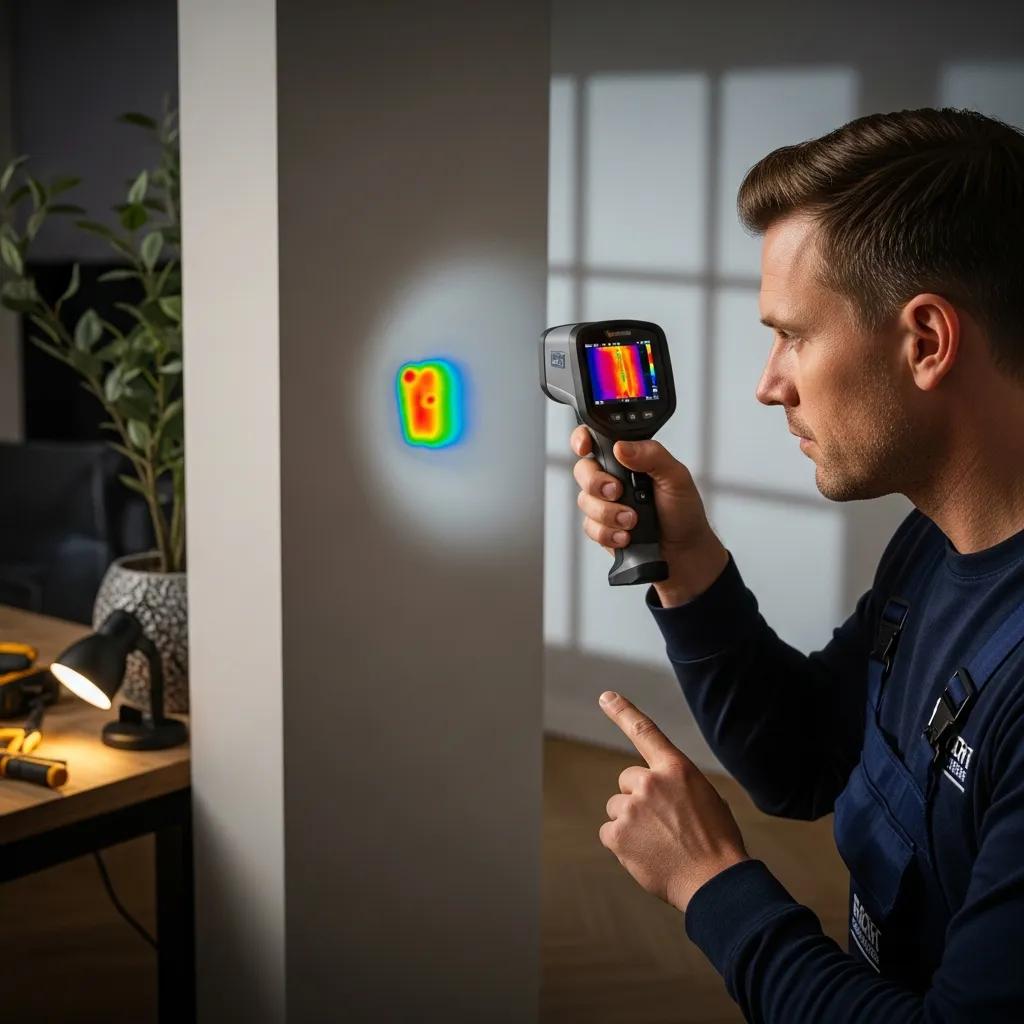
Advanced professional leak detection methods and tools are essential for accurately identifying hidden leaks without invasive procedures. These methods include:
- Acoustic Leak Detection: This technique uses sound waves to locate leaks in pipes. Specialized equipment can detect the sound of water escaping from a pipe, even if it is buried underground.
- Thermal Imaging: Thermal cameras can identify temperature differences in walls and floors, indicating the presence of moisture from leaks.
- Video Pipe Inspection: This method involves inserting a camera into the plumbing system to visually inspect for leaks, blockages, or other issues.
How Do Acoustic and Thermal Imaging Technologies Detect Hidden Leaks?
Acoustic Leak Detection: This method relies on the principle that water escaping from a pipe creates sound waves. Technicians use sensitive microphones to listen for these sounds, allowing them to pinpoint the leak’s location accurately.
The ability of acoustic methods to detect the subtle vibrations of escaping water is crucial for preventing more severe structural issues.
Acoustic Leak Detection & Catastrophic Damage Prevention
Consequently, they may not prevent potential catastrophic damage. , it generates vibrations that propagate through the pipeline as structure-borne noise. This auditory signal is
Water leak detection: a comprehensive review of methods, challenges, and future directions, E Farah, 2024
- Thermal Imaging: Thermal cameras detect heat variations in surfaces. When water leaks, it can create cooler or warmer areas on walls or floors, which can be identified through thermal imaging, indicating the presence of moisture.
Both methods are valuable for quickly and accurately locating leaks without the need for extensive digging or demolition.
What Are the Benefits of Video Pipe Inspection and Tracer Gas Detection?
Video pipe inspection and tracer gas detection offer several benefits for leak detection:
- Non-Invasive: Both methods allow for inspection without damaging walls or floors, preserving the integrity of the property.
- Accurate Identification: Video inspections provide clear visuals of the plumbing system, allowing for precise identification of leaks and blockages.
- Cost-Effective: By accurately locating issues, these methods can save homeowners from costly repairs associated with extensive digging or unnecessary plumbing work.
These advanced techniques enhance the efficiency of leak detection, ensuring that problems are addressed promptly and effectively.
How Can Homeowners Prevent Future Hidden Water Leaks?
Homeowners can prevent future hidden water leaks by taking the following steps:
- Avoid Trash Disposal in Sinks and Toilets: Do not pour grease or leftover food down the sinks, as these can cause clogs.
- Insulate Pipes: Wrap outdoor pipes with foam insulation to prevent them from freezing in severe cold.
- Keep Water Moving: Open both hot and cold water taps to trickle, which helps keep the water moving and prevents freezing.
- Regular Inspections: Have plumbing systems checked regularly by professionals to identify potential issues before they become serious problems.
- Educate Family Members: Teach children to scrape plates of food and dispose of waste properly to avoid clogs.
- Be Aware of Signs: Monitor for signs of leaks, such as sudden increases in water bills or water stains on walls, and address them promptly.
By following these precautions, homeowners can help maintain their plumbing systems and reduce the risk of hidden water leaks.
What Maintenance Practices Reduce the Risk of Hidden Leaks?
Maintenance practices that reduce the risk of hidden leaks include:
- Regular Inspections: Schedule routine checks of plumbing systems to identify issues early.
- Pipe Insulation: Insulate outdoor pipes to prevent freezing, which can lead to burst pipes.
- Proper Waste Disposal: Avoid pouring grease and food down sinks to prevent clogs that can lead to leaks.
- Educating Family Members: Teach children to properly dispose of food waste to maintain clear drains.
- Reliable Plumbing Service: Have a trusted plumbing service for regular inspections and emergency repairs.
These practices can significantly reduce the likelihood of hidden leaks developing in the home.
How Does Early Detection Contribute to Water Damage Prevention?
Early detection contributes to water damage prevention by allowing homeowners to identify and address plumbing issues before they escalate into emergencies. By regularly checking for leaks, monitoring water usage, and being proactive about maintenance, homeowners can prevent problems like burst pipes or significant leaks that lead to flooding and structural damage. Taking precautionary measures, such as insulating pipes and calling a plumber at the first sign of trouble, can significantly reduce the risk of water damage.
