 Skip to content


Flossmoor 60422 Water Heater Repair: Essential Information for Homeowners
Cold showers or a leaking tank can quickly disrupt daily life, and Flossmoor homeowners need clear, local guidance to diagnose, decide, and act when water heaters fail. This article explains how common water heater problems present, offers practical troubleshooting steps for no-hot-water and leak scenarios, compares repair versus replacement decisions, and outlines installation options including tank and tankless systems. It also describes emergency response and preventative maintenance so you can reduce downtime and avoid costly failures. Throughout, readers will find actionable checklists, comparison tables, and safety-first advice tailored to Flossmoor conditions, plus a brief note on a local providerRC Szabo Plumbing & Seweridentified as a family-owned, locally serving contractor offering water heater installation and repair in the Flossmoor area. Use this guide to understand symptoms, estimate next steps, and know when to request a professional inspection or emergency service.
What Are the Most Common Water Heater Problems in Flossmoor?
Common water heater problems include loss of hot water, visible leaks, unusual noises, discolored water, and pilot light or ignition failures. These issues arise from a mix of mechanical wear (like a failing heating element or corroded tank), sediment accumulation inside the heater tank, or fuel and electrical supply interruptions that prevent normal operation. Early troubleshooting can resolve many issues, but some signs such as active leaks or gas smells require immediate professional attention because they indicate component failure or safety risk. The table below helps homeowners map each frequent problem to typical causes and immediate homeowner steps to take before calling a technician.
The following quick-reference table summarizes common problems, likely causes, and immediate steps to reduce damage and risk.
| Problem | Common Causes | Immediate Homeowner Steps |
|---|---|---|
| No hot water | Tripped breaker, pilot out, failed element, thermostat fault | Check power/gas supply, reset breaker, inspect pilot per manual, avoid DIY gas work |
| Leaking tank | Corrosion, loose fittings, failed pressure relief valve | Shut off water supply, contain leak, call pro to assess tank condition |
| Strange noises | Sediment buildup, overheating, thermal expansion | Flush tank if possible, lower thermostat, schedule descaling |
| Discolored water | Corrosion inside tank, failing anode rod | Run cold taps, avoid drinking, capture sample and call technician |
| Pilot/ignition issues | Gas supply interruption, faulty igniter | Check gas valve position, ventilate area, stop if gas smell present and call pro |
How to Troubleshoot No Hot Water Issues
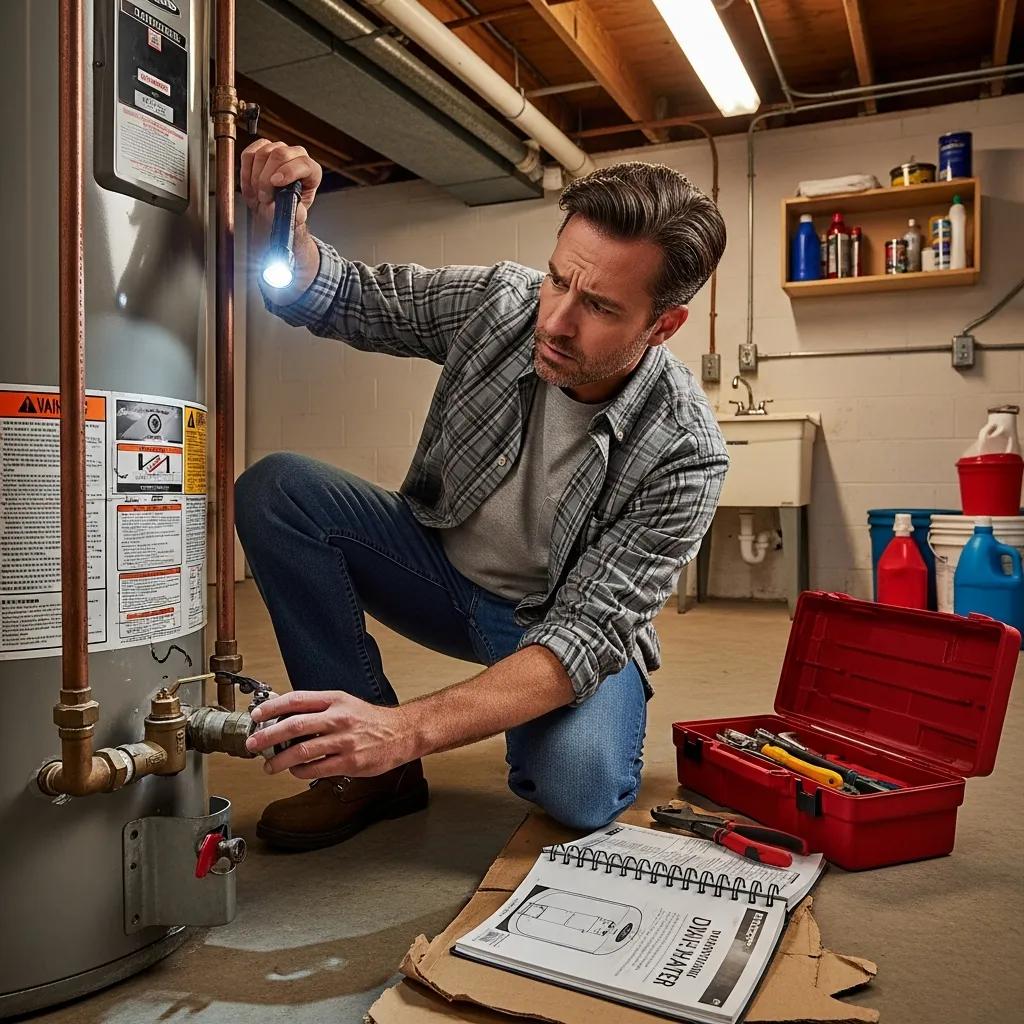
No hot water often traces to a controllable supply or simple electrical issue that homeowners can verify quickly through a short diagnostic checklist. First, confirm whether the issue affects the whole house or a single fixture to isolate the problem and check the circuit breaker and gas supply for obvious faults. Second, inspect the pilot light or ignition system on gas units and test electric elements for continuity if you have safe access and basic tools; do not attempt gas repairs if you detect a gas odor. Third, consider sediment-clogged elements or a failing thermostat as potential causes; flushing the tank can temporarily restore performance but may not solve deeper failure. If these steps do not restore hot water, or if you encounter leaks, persistent electrical tripping, or gas smells, schedule a professional diagnostic to avoid safety hazards and ensure correct repairs.
When Should You Choose Water Heater Repair or Replacement in Flossmoor?
Deciding between repair and replacement depends on unit age, frequency and cost of repairs, signs of tank corrosion or leaks, and relative energy efficiency of available replacements. Repair is often sensible for isolated, low-cost fixes on newer units where expected remaining lifespan remains high, while replacement becomes more compelling when repair cost approaches a significant fraction of a new unit or when the tank shows irreversible corrosion. Local Illinois cost drivers including permit and disposal fees and fuel-type conversion complexity also influence the decision. Homeowners should weigh projected remaining lifespan and energy savings when considering replacement, and obtaining an on-site diagnostic provides a precise comparison between repair cost and replacement investment.
Below is a comparison table to help decide whether to repair or replace based on common attributes.
| Option | Key Attribute | Typical Outcome |
|---|---|---|
| Repair | Age under recommended lifespan, isolated failure | Lower immediate cost, extended short-term use |
| Replacement | Major leaks, rust, frequent failures, age beyond lifespan | Higher upfront cost, better long-term reliability and efficiency |
| Trade-offs | Cost vs. lifespan | Repair can be cost-effective short-term; replacement reduces repeat calls |
When in doubt, a professional diagnostic clarifies whether repair will restore reliable service or whether replacement avoids recurring failures. RC Szabo Plumbing & Sewer offers repair and replacement services in Flossmoor including on-site diagnosis and estimates, and they back work with satisfaction and “No Mess” guarantees to provide homeowners with transparent cost guidance and peace of mind.
Signs Your Hot Water Heater Needs Replacement
Certain red flags strongly indicate that replacement is the prudent choice rather than another repair attempt. Visible corrosion on the tank exterior, rust-colored water that returns after flushing, large or worsening leaks, and a pattern of repeated breakdowns despite recent repairs all point to end-of-life conditions. Similarly, when a unit’s efficiency has markedly declined causing higher energy use for the same hot-water demand replacement with a modern, efficient model can lower operating costs and reduce call-backs. In practice, if repair estimates approach a large fraction of replacement cost or if multiple components are failing, replacement typically yields better long-term value.
These replacement signals help homeowners avoid “repair trap” scenarios where repeated fixes lead to higher cumulative costs and inconvenience.
Cost Factors for Repair and Replacement in Flossmoor
Repair and replacement costs depend on parts, labor, permit fees, disposal of old equipment, and the type of new unit chosen (tank vs. tankless or hybrid). Labor and access complexity affect on-site time, while fuel type transitions (electric to gas or vice versa) can add to installation scope. Typical local cost considerations include permit requirements and safe disposal of old tanks, which vary regionally and add to overall project pricing. For accurate planning, homeowners should request a tailored estimate that itemizes parts, labor, permits, and any recommended upgrades to venting or electrical service.
- Parts and labor: Component prices vary; complex diagnostics add time.
- Permits and disposal: Local fees and environmental disposal affect total cost.
- Unit type: Tankless units have higher upfront costs but lower operating costs.
Reviewing these cost drivers helps you compare short-term repair savings to long-term replacement benefits and decide with clarity.
What Are Your Water Heater Installation Options in Flossmoor?
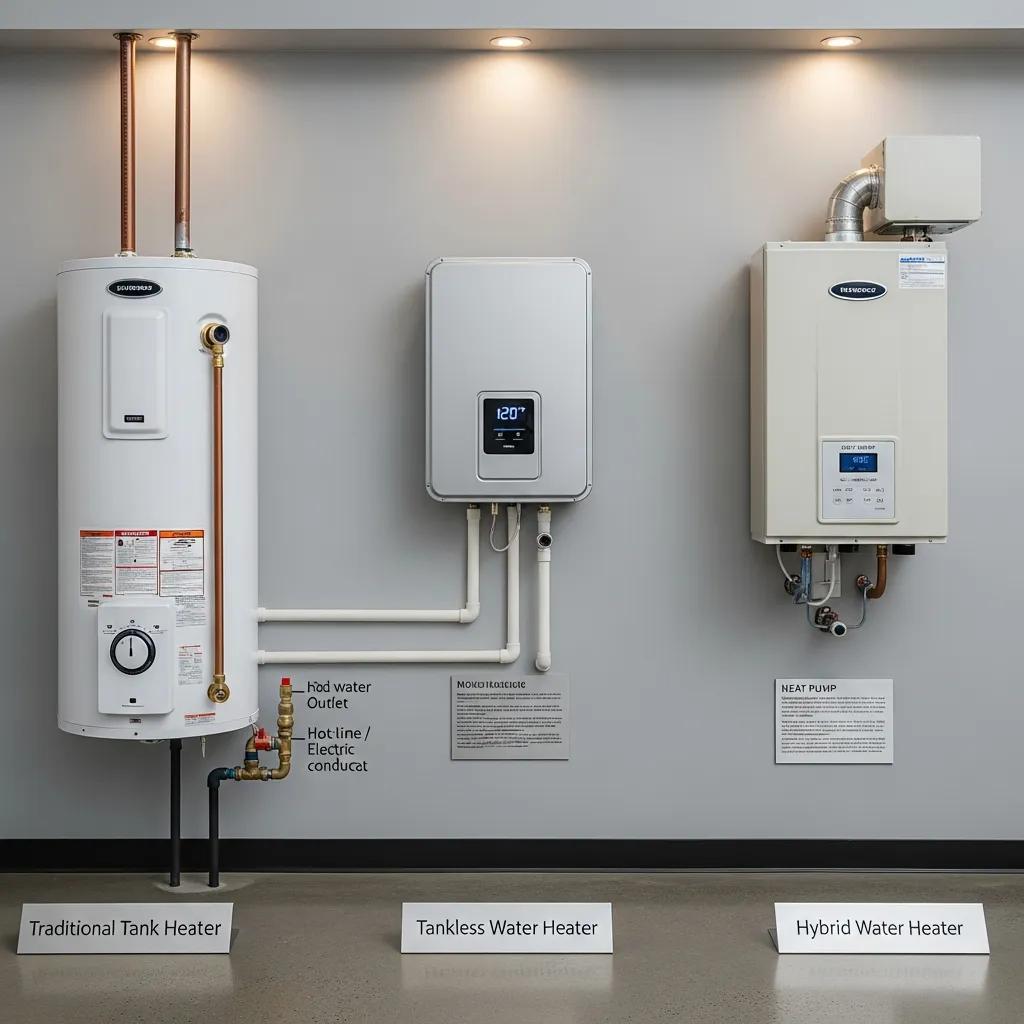
Homeowners choosing a new water heater must consider tank systems, tankless on-demand models, and hybrid/heat-pump options, as well as fuel type (gas or electric) and space or venting constraints. Tank systems remain common for straightforward replacements and lower upfront cost, while tankless units provide on-demand hot water and improved energy efficiency for the right household size. Hybrid heat-pump units save energy in suitable installations but require space and specific conditions. Installation choices should match household hot-water usage patterns, available fuel, and budget, and professional assessment ensures proper sizing and venting requirements are met.
The table below compares tank and tankless options across core attributes.
| System | Installation Cost Range | Energy Efficiency | Typical Lifespan | Ideal Household |
|---|---|---|---|---|
| Traditional Tank | Lower upfront, moderate install complexity | Moderate efficiency, standby loss | 8–12 years | Households with steady simultaneous demand |
| Tankless | Higher upfront, complex install (venting/upgrade) | High efficiency, on-demand | 20+ years | Homes wanting continuous hot water and lower operating costs |
| Hybrid/Heat Pump | Moderate-high install, space needs | Very high efficiency | 10–15 years | Energy-conscious households with space for unit |
RC Szabo provides installation services for both tank and tankless systems in Flossmoor and can offer estimates to compare lifecycle costs and expected energy savings for each option. Requesting a site visit helps determine necessary venting, electrical upgrades, or fuel conversions.
Benefits of Tankless Water Heater Installation
Tankless water heaters deliver on-demand hot water by heating water at the point of use, which eliminates standby heat loss and improves energy efficiency. This mechanism reduces long-term operating costs and extends equipment lifespan compared with many traditional tanks, making tankless systems attractive for homeowners focused on efficiency and space savings. Tankless units also have a compact footprint and can be installed in smaller mechanical spaces, though initial installation often requires higher labor and potential venting or gas-line upgrades. For households with intermittent high demand, properly sized tankless systems or multiple units can provide consistent hot water while lowering utility consumption over time.
These advantages make tankless systems a compelling option for many Flossmoor homes considering long-term energy savings.
Traditional Tank Water Heater Installation and Replacement
Traditional tank water heaters store and maintain a reserve of hot water, providing simplicity of installation and lower upfront equipment costs, which often makes them an economical replacement in existing installations. Sizing guidance typically matches tank capacity to household peak usage, with common sizes catering to family size and morning/evening demand patterns. Installation timelines are generally shorter than for tankless conversions, and fewer structural or venting upgrades are needed in like-for-like replacements. While operating costs may be higher due to standby heat loss, tanks remain a sensible choice where upfront budget or installation simplicity is the priority.
Choosing between tank and tankless requires balancing installation complexity, upfront budget, and anticipated energy savings.
How Does RC Szabo Provide Emergency Water Heater Repair in Flossmoor?
RC Szabo Plumbing & Sewer emphasizes rapid, safety-first emergency response for urgent water heater failures in Flossmoor, offering 24/7 emergency availability and trained technicians who perform on-site triage to stabilize systems. When homeowners face active leaks, major flooding risk, or loss of hot water that affects critical needs, immediate steps include shutting off the water supply and, for gas units, turning off the gas and evacuating if you detect an odor. RC Szabo’s emergency workflow focuses on quick diagnostics, temporary safety measures, and clear guidance on whether a temporary fix or full replacement is needed, backed by a No Mess Guarantee and a Satisfaction Guarantee to reassure homeowners about workmanship and site care.
24/7 Emergency Repair Services and Rapid Response
In an emergency, the expected response sequence is straightforward: homeowner calls, dispatch triages the issue, technicians arrive to perform safety shutdowns, diagnose the failure, and implement temporary or permanent fixes as appropriate. Typical on-site triage includes isolating water and gas, containing leaks, and assessing whether a repair or replacement is safer and more cost-effective. RC Szabo’s rapid response emphasizes courteous, trained technicians, transparent assessments with no hidden costs, and clear communication about next steps and timelines so homeowners can make informed decisions during urgent situations.
This service model helps minimize damage, restore hot water quickly when possible, and provide transparent options for lasting repairs.
Preventative Maintenance to Avoid Emergency Repairs
Regular maintenance reduces emergency calls by addressing sediment, anode rod wear, thermostat calibration, and pressure relief valve performance before failures occur. Recommended tasks include annual tank flushing to remove sediment, periodic anode rod inspection and replacement as needed, thermostat checks, and verifying pressure relief valve operation to prevent tank rupture. Maintenance plans provide consistent check-ups that extend service life, improve efficiency, and identify issues early; scheduling routine inspections with a qualified technician lowers the chance of sudden failures and emergency repairs.
Proactive maintenance is the most reliable way to avoid disruptive failures and keep your water heater operating safely and efficiently.
Frequently Asked Questions
What are the signs that my water heater needs maintenance?
Signs that your water heater requires maintenance include unusual noises, fluctuating water temperatures, and visible leaks. If you notice sediment buildup at the bottom of the tank, it may indicate the need for flushing. Additionally, if your water is discolored or has an unusual odor, it could signal corrosion or a failing anode rod. Regular maintenance checks can help identify these issues early, ensuring your water heater operates efficiently and prolongs its lifespan.
How often should I flush my water heater?
Flushing your water heater is generally recommended once a year to remove sediment buildup that can affect efficiency and performance. However, if you have hard water, you may need to flush it more frequently, perhaps every six months. Regular flushing helps maintain optimal heating efficiency and can prevent premature wear on the heating elements. Always consult your manufacturer’s guidelines for specific recommendations based on your water heater model and local water quality.
Can I perform water heater repairs myself?
While some minor troubleshooting tasks can be performed by homeowners, such as checking the circuit breaker or pilot light, most repairs should be left to professionals. Water heaters involve electrical components and gas lines, which can pose safety risks if mishandled. Additionally, improper repairs can lead to further damage or void warranties. It’s best to consult a licensed technician for any significant repairs or if you encounter issues beyond basic maintenance.
What should I do if I smell gas near my water heater?
If you smell gas near your water heater, it’s crucial to act immediately. First, turn off the gas supply to the unit and evacuate everyone from the area. Do not use any electrical devices or create sparks, as this could ignite the gas. Once you are at a safe distance, contact your gas company or a qualified technician to inspect the situation. Gas leaks can be extremely dangerous, so prompt action is essential for safety.
How can I improve the energy efficiency of my water heater?
Improving the energy efficiency of your water heater can be achieved through several methods. First, consider insulating the tank and pipes to reduce heat loss. Setting the thermostat to 120°F can also save energy while providing sufficient hot water. Regular maintenance, such as flushing the tank and checking the anode rod, ensures optimal performance. Additionally, upgrading to a more efficient model, like a tankless or hybrid water heater, can significantly lower energy costs over time.
What are the benefits of a tankless water heater?
Tankless water heaters offer several advantages, including on-demand hot water, which means you won’t run out during peak usage times. They are more energy-efficient since they only heat water as needed, reducing standby heat loss associated with traditional tanks. Tankless units also have a longer lifespan, often exceeding 20 years, and take up less space due to their compact design. These benefits make them an attractive option for homeowners looking to save on energy costs and improve convenience.
Conclusion
Understanding the common issues and solutions related to water heaters empowers Flossmoor homeowners to make informed decisions about repair or replacement. By utilizing practical troubleshooting steps and knowing when to call a professional, you can minimize downtime and avoid costly failures. Explore the range of services offered by RC Szabo Plumbing & Sewer to ensure your water heater operates efficiently and reliably. Take the next step towards a hassle-free hot water experience by contacting us for expert assistance today.
